After Arrival, I started paying attention to language
I love Denis Villeneuve's science-fiction film Arrival. It follows the linguist Louise Banks as she tries to communicate with the heptapods who arrive on Earth, and to understand their language and purpose.
I have never forgotten the film's central idea: language changes how a person understands time, memory, and experience. Language carries meaning, but it also participates in how we organize reality, build relationships, and understand what is happening.
I brought that question back to my own work. A Prompt placed in a chat box has already gone through one compression.
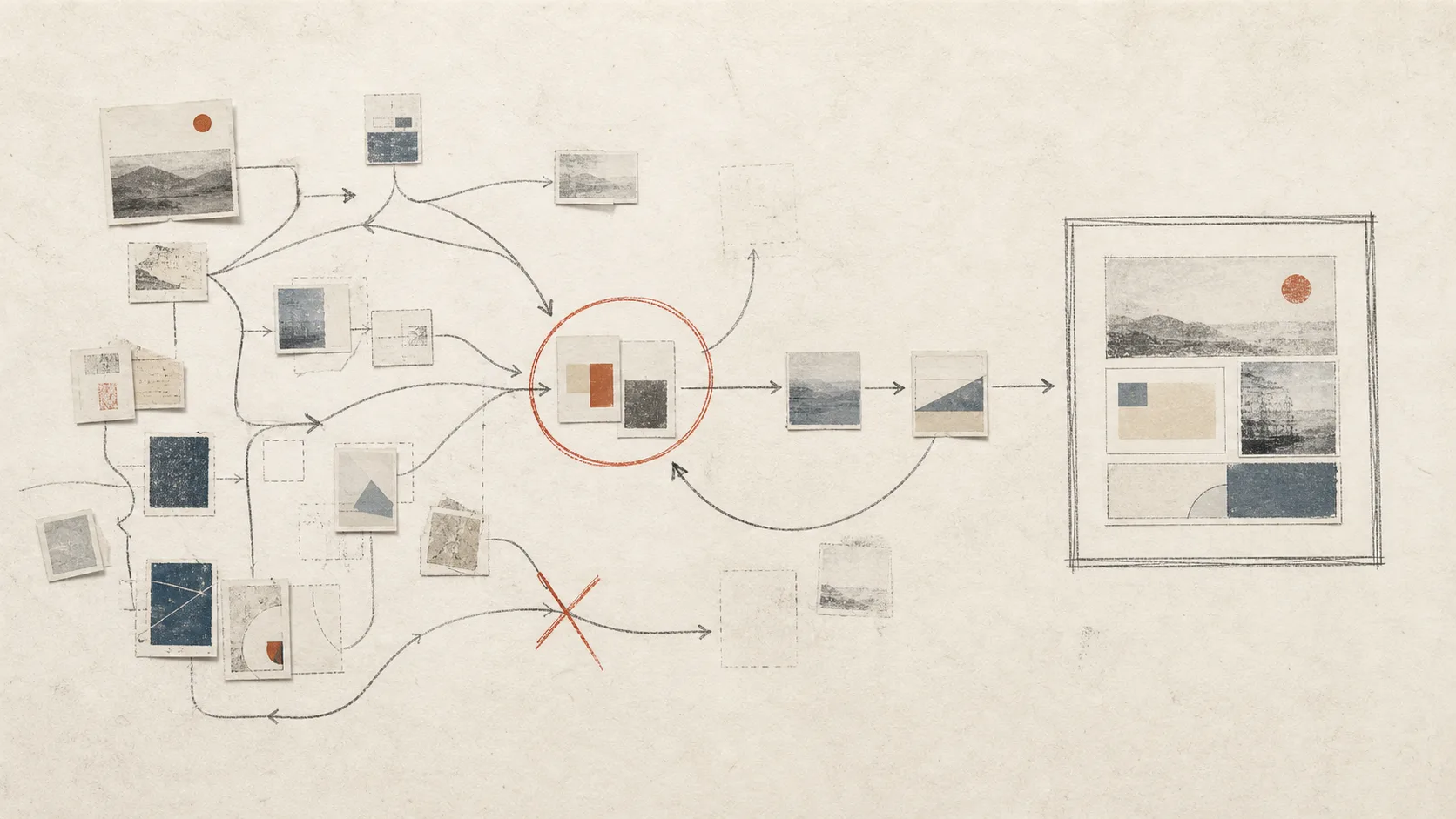
Before it appears, an idea may still be unfinished. A direction has just surfaced. A detail has been circled twice. A sentence changes its emphasis halfway through. A block moves to the side. One path gets crossed out. By the time these things become a Prompt, much of the process has already been translated into one line.
That sent me looking for the thing that still carries an idea's shape before the Prompt appears.
I came back to the whiteboard. It has long been used in meetings and classrooms for a particular kind of work: bringing an unclear thing into a shared space and gradually forming a goal through writing, pointing, moving, and returning.
Whiteboards are where goals take shape
Many AI collaboration interfaces start with a goal that has already been named. Requirements, issues, repositories, files, diffs, tests, and pull requests all place the goal before the work. A whiteboard works earlier. It lets materials, relationships, and judgments appear before the goal has a stable name.
Workplace meetings often begin with a few sentences, several pieces of material, and a question that has no answer yet. Someone places keywords together. Someone adds a line, moves a block to the side, or crosses out the direction that seemed right a moment ago. A goal gradually appears through these actions. The final brief, decision, or task is only a later part of that shared derivation.
Teaching boards follow a similar path. A teacher starts with a question, writes the intermediate steps, returns to add a condition, boxes a relationship, and then opens the next one. Students see how a conclusion earns its place. What has already been written stays in the room and becomes context that the next step can return to.
A whiteboard puts thought in a space that people can see together and keep changing. If we treat the process itself as context, the words, positions, lines, erasures, pauses, speech, and order on the canvas form a language with spatial and temporal grammar. It can place things side by side, point back, leave space open, and branch. What was written earlier remains present, while later actions can change how earlier relationships are understood.
A person puts an unfinished idea into the space, and the space organizes it into context for the next round. The goal appears through the process, while the people involved can keep seeing how it formed.
Another entry: say it where you mean it
The process above is one way to use Canvas Prompt: let an unfinished thought unfold on the canvas and continue through space, speech, and time.
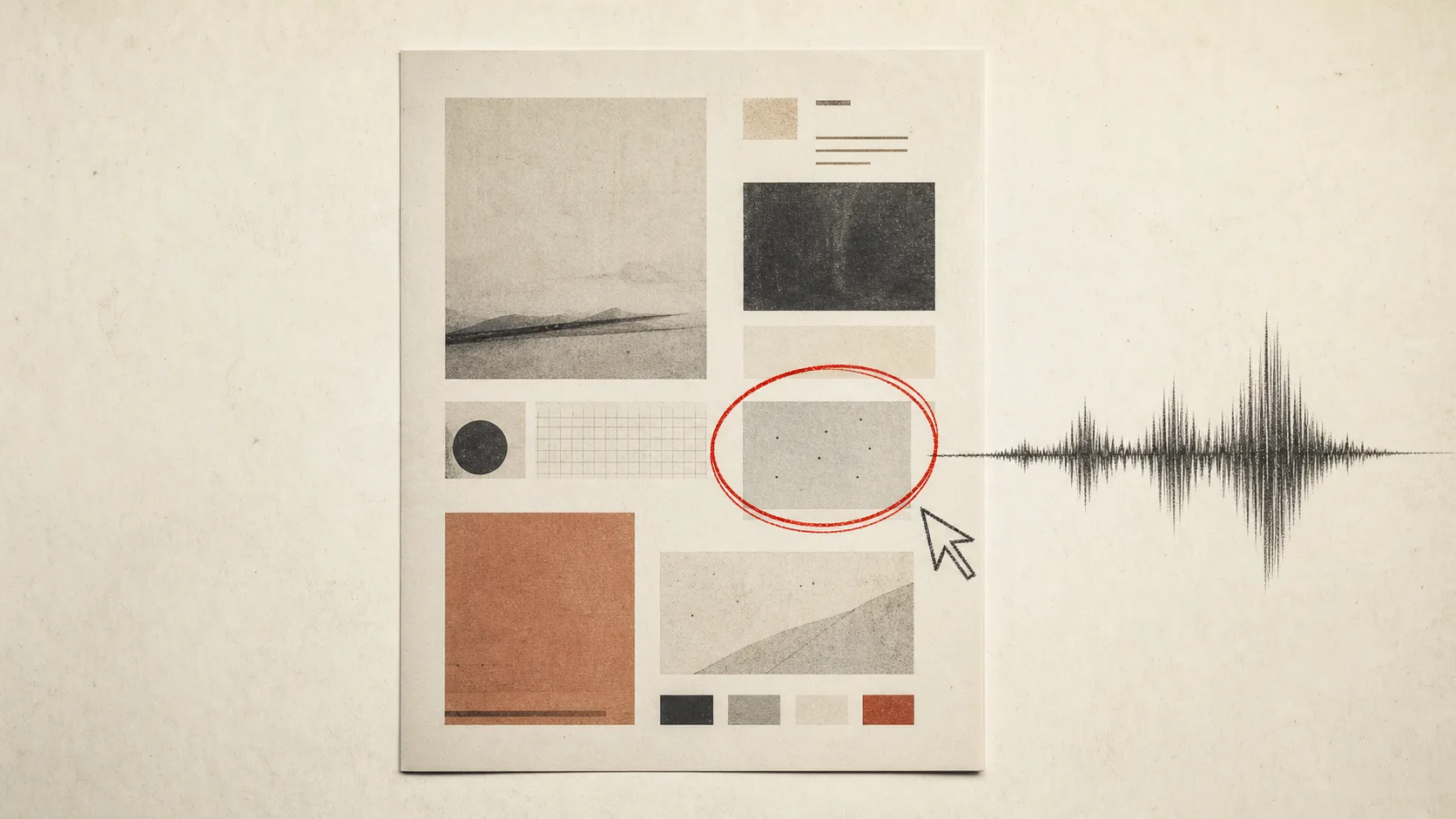
There is another, more concrete entry. Place an image or a single PPT slide on the canvas. Circle a headline, an image, or a layout area while speaking. Mouse movement, pauses, and circles provide the spatial anchor. Words such as this, here, and move it up a little provide the direction of change.
In one visual review we made, I circled a headline and said: This title is too absolute. Keep the thought, but make it quieter. Then I circled the evidence block in the middle and said: Move this up a little, but keep it tied to the headline. This is how people speak when they are looking at the same material. The circle fixes this in the shared scene, while language says what should change.
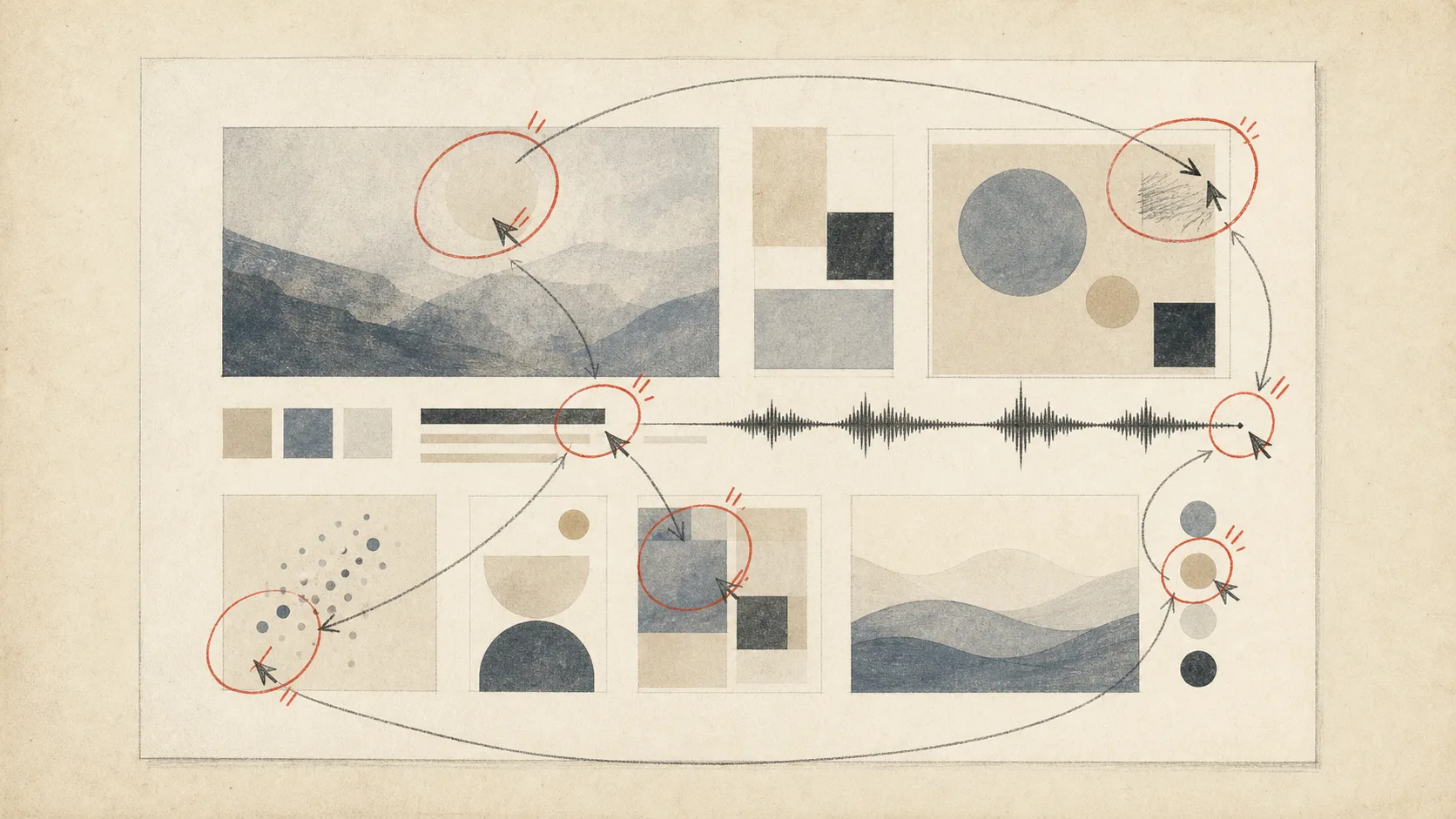
The same approach can hold a full page of PPT refinements. One review can circle several areas and place the headline, layout, evidence position, and other edits into the same process before handing it to an AI. A person does not need to name every object, give its coordinates, and write a complete command. They can speak through the page as they would to another person reviewing it.
This makes reference an important input form. The person and the AI look at the same material first, then use a circle and language to make the change. One circle and one sentence can place the location, object, and intended edit in the same context.
Bringing this language into AI
A Prompt usually appears after this process. By then, a set of spatial and temporal relationships has been compressed into one line of text.
A final image can show an AI what remains. It says much less about what appeared first, what moved later, which path was abandoned, where the user was pointing while speaking, or when a judgment changed.
Canvas Prompt lets a person draw, circle, move, paste, and explain. When a round ends, the canvas stays in place and a device-local Prompt Package is created. It gathers the final canvas, canvas events, speech, and time order into one traceable context.
In Codex Desktop, the user explicitly asks the conversation to continue with the canvas context before the latest completed round is read. The AI first understands what happened in the round, then enters the next collaboration. A person's plan and confirmation remain present when the work moves into concrete execution.
That is also why I call it Canvas Prompt. The canvas is where an idea takes shape. The Prompt Package is the form that process can take when it enters an AI workflow. Between them is a compilation path, and Canvas Prompt keeps that path visible.
Reclaiming the right to think
What I want to keep is the human initiative at the beginning of thought.
Where a question begins, which materials belong together, which direction deserves more attention, and when a judgment should be revised all happen before a Prompt. AI can listen, understand, question, organize, and execute, while the person's starting point, turns, and confirmation stay present.
That is why I see this canvas as an interface for thought sovereignty. A person writes first, draws first, makes the first connections, and forms the first judgment before bringing the AI into the process.
For me, Canvas Prompt is also an attempt to reclaim the right to think.
Why I made Canvas Prompt
I am putting Canvas Prompt on my own site for the first time to make one thing clear: why I needed this kind of canvas, how it keeps the context before an idea takes shape, and how that context enters an AI workflow.
It puts its attention on what happens before the answer appears.
A Prompt is what an idea becomes after compression. A canvas lets that idea remain visible, develop further, and reach an AI before the compression is complete.