
Day34
Detective X
A city treasure hunt: follow clues to find the target.
Visit the product website ↗Image: official website mark
By dlxeva · About 10 minutes · Updated 22 October 2026
CJ arrived in London with £100 and set himself a challenge: earn £1 million in 100 days, working on his own with AI.
I think I first came across CJ in a short video. The entrepreneurship reality shows I knew were edited and packaged. I wanted to see how one person with AI would actually go about it.
At the start, he made a website where followers could vote on whether he would earn £1 million in 100 days. I voted no. My considered view was that the target would be very difficult to reach, but I supported his attempt.
Soon after the challenge began, he had something more immediate to sort out: where to sleep that night.
On Day 3, CJ took a bus across the river to meet someone he had never met before.
His name was Eric. He had watched CJ’s videos and sent a message offering somewhere to stay. On the way, CJ thought they might get along and that he might be able to sleep on Eric’s sofa.
When they met, Eric said he had been following CJ for about five months.
CJ asked how long he could stay and said he would try to support himself as soon as possible. Eric said about a week. He gave up his own room and left two bottles of water for CJ.
Over a meal, CJ asked what he could do in return. Later, he mentioned cooking Chinese food to say thank you.
For a while, the business challenge gave way to finding a bed, eating and saying thanks. The million-pound target was still there. On the third day, he had somewhere to stay for a few more nights.
Travel was one direction he tried. He went out to talk to tourists about what they needed in an unfamiliar city. AI audio guides, route planning, exploration maps and travel videos gradually became product features.
By Day 22, he was still working out which features to keep.
In earlier street interviews, he had written free souvenirs on a piece of paper and offered them in return for two minutes of tourists’ time. People were willing to talk and responded positively. But, as he pointed out, even saying they would pay was still short of actually paying.
Those two minutes mattered to him too. He had secured their attention with a souvenir; online, he would have to earn it again. He wanted a feature people could understand quickly, download and pay for.
He kept considering toilets, air conditioning, and turning a trip into a video to share on social media. Eventually, he decided to cut features.
Finishing the app still left accounts, paperwork and app-store review. On Day 34, he released Detective X, a city treasure-hunt game.
On Day 40, he described showing people his two apps. They were more interested in the tool for finding toilets, air conditioning and other facilities. He had already put considerable time into the treasure-hunt app, but the practical tool was easier to explain.
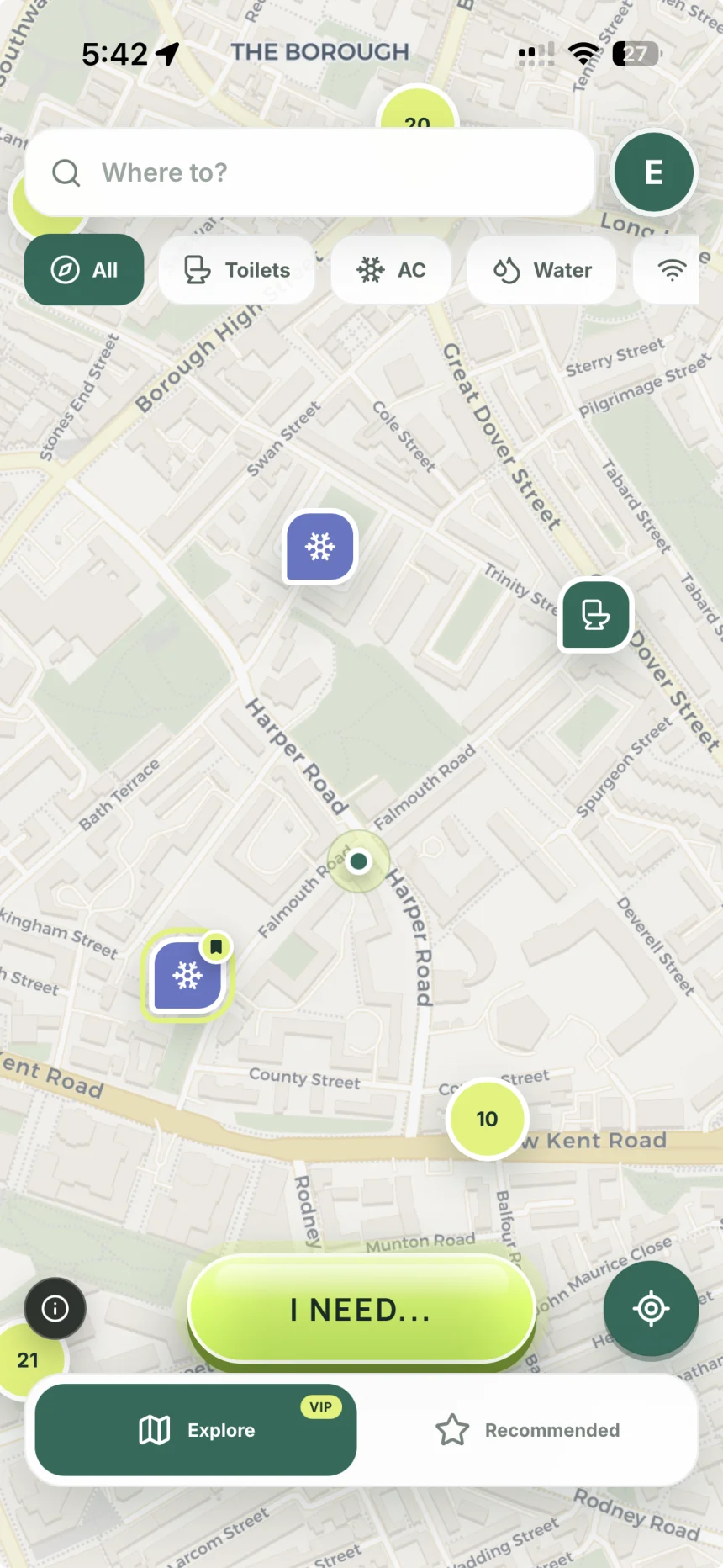
AI had become part of his routine. On Day 46, he gave a coding assistant tasks before going out for a run, leaving it to work while he was away. On Day 49, AhaThere went live, helping visitors find toilets, air conditioning and Wi-Fi.
Day34
A city treasure hunt: follow clues to find the target.
Visit the product website ↗Image: official website mark

Day49
Find toilets, air conditioning and Wi-Fi nearby.
Visit the product website ↗Image: App Store icon
The apps were in the stores. Next, people needed to download and use them, and ideally pay. Two days later, he decided to go back onto the street.
Day 22 video ↗ · Day 34 video ↗ · Day 40 video ↗ · Day 46 video ↗
The table had been discarded. CJ planned to put a download QR code on it and take it somewhere busy with tourists so they could download AhaThere on the spot.
Before he left, one thing after another needed sorting out.
The QR code did not print properly, so he printed it again. As he was getting ready to leave, the Google Play version became available too. He realised that the code already on the table led only to Apple’s app store. Android users needed another way in.
He asked Codex to change it: scanning the code would open the website, where people could choose iOS or Android and go to the right store. One QR code would do.
Then he needed to print it again.
AI had done one specific part of the preparation. The download page was fixed. The table, the printing, the trip outside and introducing the app to strangers were still waiting for him.
On the street, things went less smoothly than the preparations might have suggested.
In the video, CJ mentioned the heat more than once. He moved around looking for more tourists and saw some people download the app. People looked, smiled and showed interest, but few stopped to finish downloading it.
In his recap, he gave the result: about two and a half hours, three downloads and no purchases.
He remembered people on social media saying the app was useful and showing interest. Passers-by might simply have been on their way somewhere. He began taking the promotion online, making short videos.
He was also reconsidering the pricing. On Day 53, he discussed replacing the subscription with a one-time purchase. Travellers could buy the app when they needed it without working out how long to subscribe for.
On Day 57, he woke up to AhaThere’s first paying customer. He did not know who the buyer was and kept saying how happy he felt. The app now offered lifetime access for a single payment. Someone had paid to use it.
Day 52 video ↗ · Day 53 video ↗ · Day 57 video ↗
By Day 59, he was considering other partnerships. Could London’s Wi-Fi and souvenir businesses introduce tourists to the app through a QR code and share the revenue? He asked ChatGPT to draft a short email and planned to call or walk into shops to talk.
In the past, he had business development staff to help. Now he had to try these things himself.
That same day, he also described meeting someone who ran a branding company. They had begun discussing whether AI could improve the company’s workflow. He planned to learn more about how it delivered work to clients, then discuss a budget.
On Day 60, he posted a short update. He felt weak and had too many problems he wanted to solve. Later, he bought some bread, planned to go to bed early and reminded viewers to take care of themselves.
He was still looking for ways to promote the travel app. A few days later, a custom software project for a business brought in new revenue.
On Day 64, a business client paid £5,000.
Talking about it the next day, CJ still said he preferred building products for consumers. He had been thinking about promoting an app for finding toilets and air conditioning. Now he needed to spend time on an AI software project for a business.
He also described what the payment changed. With less pressure over living costs, he could concentrate on work. He wondered whether finding business clients earlier and building up some revenue might have given him more resources for the consumer products he wanted to make.
He talked about AhaThere, which he wanted to promote, and about a client who had specific needs and had already paid.
By Day 71, he had decided to prioritise delivering the business project.
He had been working indoors for days. The previous night he had worked until two in the morning; the night before, until four. He went to the gym to try to restore some balance and said he had not recorded anything for several days.
As the work progressed, the client’s actual needs became clearer. They differed from his original plan.
Before the challenge, he said, he had a team to help build products, promote them and serve clients. As a solo founder, he found there was too much to do. He had wanted to find opportunities to promote AhaThere. For now, he would put that off and concentrate on the contract.
By Day 91, he was demonstrating the software and preparing the client’s team to use it. He planned to ask AI to help write detailed instructions, then personally show the staff how to use each tool.
The software had to work within someone else’s working day. He still had explanations to give, feedback to gather and changes to make.
On Day 97, with three days left in the challenge, the client paid another £30,000.
He would continue developing and revising the software for the client’s team after receiving the payment. The challenge was nearly over; his work with this client would continue.
At the end of the challenge, his website listed total revenue of £37,685.99. The two payments from this client totalled £35,000, or 92.9% of all revenue.
Revenue was £37,685.99 and expenses were £4,942.56. Including the initial £100, the closing balance was £32,843.43.
I watched many episodes and used transcripts to follow his progress. Then I got busy. Some of the automation I had planned for keeping up never got running, and I stopped watching. But I still remembered CJ’s challenge. As the hundred days drew to a close, I came back and worked with AI to organise the transcripts and catch up on what I had missed. The attempts, choices and changes scattered across different videos began to connect.
I wanted to follow him through those 100 days. The videos were long, and events were spread across episodes, so it took some effort to piece them together. The gap between events and publication also made it hard to feel I was following along as things happened.
CJ also talked about why he was documenting the challenge. On Day 7, he hoped it would attract attention and encourage people who were hesitating to act. By Day 87, he described another purpose: AI made software easier to build, but clients still needed to trust the person building it. Sharing AI knowledge and documenting the challenge were ways for him to earn that trust.
I wanted to feel more involved as a viewer; he also hoped the content would help him find opportunities. Building projects, filming, editing and publishing all depended on the same person’s time.
Day 7 video ↗ · Day 87 video ↗
After I started using AI, I too felt I could move many projects forward at once. In practice, judgment, communication and checking the results still took my own energy. AI working quickly did not mean I could manage that many things at the same time.
Looking back at CJ using AI to change a download page and write a partnership email, then personally demonstrating, discussing and revising the work, my original question became more specific: AI can help someone do more work, but how many things can that person look after at once?
Watching him build apps, look for users on the street and demonstrate his work to clients, I still find it wonderful to have been able to follow this process.
I admire his willingness to step into the unknown. In my own projects, things often turn out differently from the plan, so I can understand why he kept adjusting his decisions as he worked. I also agree with the ten pieces of advice he shared in his retrospective.
One small moment from his daily life has stayed with me too.
On Day 71, after talking about the client project and AhaThere, he showed viewers his new place. It was small, with shelves and a little kitchen. He said he really liked it.
As he showed where he would sleep, he remembered that he still needed a pillow.
He needed to go and find one.
I also agree with the advice he shared in his retrospective. These are brief paraphrases in his original order.
Explore how the paths overlapped, or select a product to highlight its related path.
Four choices in date order. Expand a point to see the situation and what followed.
Audio guides, routes, maps and videos were all in consideration. He needed a feature visitors could understand quickly.
On Day 40, people hearing about his two apps showed more interest in finding toilets, air conditioning and other facilities.
About two and a half hours of street promotion brought three downloads and no purchases.
He kept testing promotion and began reconsidering how to charge for the app.
Travellers had to consider how long to subscribe when they needed the app.
On Day 57, AhaThere had its first paying customer. CJ did not know who the buyer was and was delighted to see the payment.
He still preferred consumer products and wanted to promote AhaThere. A business client had paid, and delivery needed his time.
By Day 91, he was preparing demonstrations and training. Development and revisions would continue after the Day 97 payment.
Visit Day1CJ’s website ↗ · Retrospective and ten pieces of advice ↗
This page draws on CJ’s public videos, the balances on his website and his retrospective on the challenge.
The route chart shows selected spans of recorded activity; the interval chart connects pairs of records. Revenue and closing balance are shown separately. The closing balance includes the initial £100.
Website balance API · Website statistics API · CJ's later retrospective · Day65 · Day71 · Day97